LAE-32
D-Lysergic acid ethylamide (LAE-32) is a derivative of ergine. It is reported to have some LSD-like effects but is weaker and shorter lasting, with an active dose reported to be between 0.5 and 1.5 milligrams.
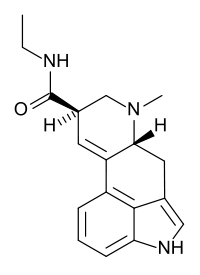 | |
| Clinical data | |
|---|---|
| Other names | LAE, Lysergic acid ethylamide, d-lysergic acid ethylamide, d-ethyllysergamide, |
| Routes of administration | Oral |
| Pharmacokinetic data | |
| Metabolism | hepatic |
| Excretion | renal |
| Identifiers | |
IUPAC name
| |
| CAS Number | |
| PubChem CID | |
| ChemSpider | |
| Chemical and physical data | |
| Formula | C18H21N3O |
| Molar mass | 295.378 g/mol g·mol−1 |
| 3D model (JSmol) | |
SMILES
| |
InChI
| |
| (verify) | |

It was studied by the CIA as part of Project MKULTRA. Documents published by the CIA under the Freedom of Information Act suggest it causes "a schizophrenia-like condition" but it allows people with schizophrenia to remain indifferent to their disorder.[1]
References
This article is issued from
Wikipedia.
The text is licensed under Creative
Commons - Attribution - Sharealike.
Additional terms may apply for the media files.